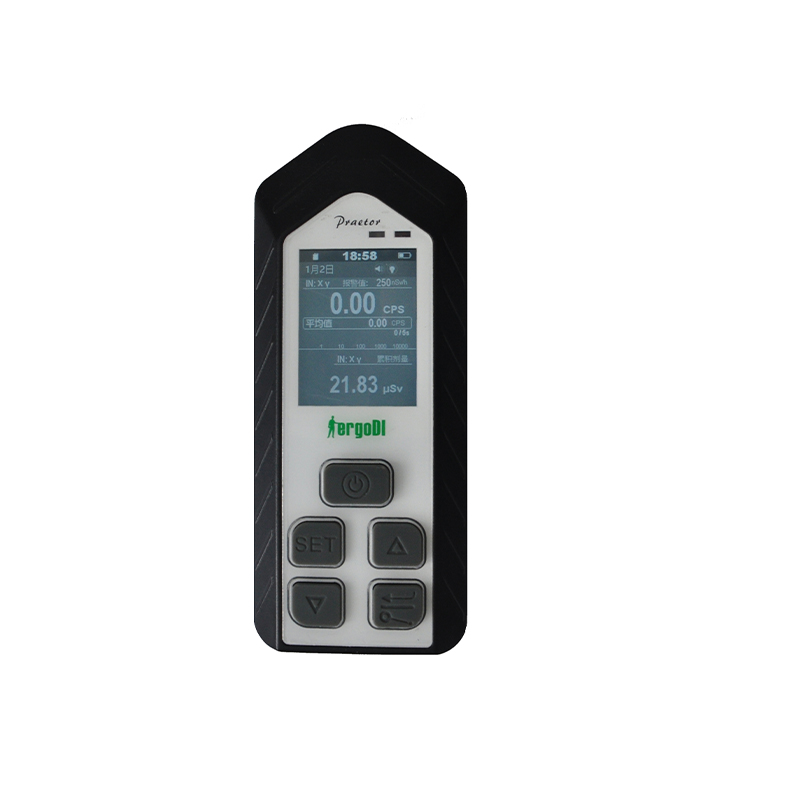
**Advancements in Radiation Measurement Devices: Enhancing Safety and Precision**In the realm of radiological safety and environmental monitoring, the accuracy and reliability of radiation measurement devices are paramount. As industries ranging from healthcare and nuclear energy to environmental science continue to demand rigorous radiation detection and monitoring, innovative devices have become indispensable tools for professionals worldwide. Recent developments in radiation measurement technologies have significantly elevated the standards of detection, ensuring enhanced precision, user-friendliness, and durability in challenging environments.Radiation measurement devices, essential for detecting ionizing radiation such as alpha, beta, gamma rays, and neutrons, play a critical role in protecting human health and the environment. These devices are utilized in various applications, including monitoring radiation exposure for workers, surveying contaminated sites, ensuring safe disposal of radioactive materials, and conducting scientific research. With ongoing technological advancements, modern radiation detectors are becoming more sophisticated, integrating digital technology, wireless communication, and real-time data analytics.One notable category of radiation measurement instruments includes Geiger-Müller counters, scintillation detectors, ionization chambers, and semiconductor detectors. Each type offers distinct advantages. Geiger-Müller counters remain favored for their simplicity and ability to detect a broad range of radiation types, making them a staple in many fields. Scintillation detectors, known for their high sensitivity and energy resolution, are widely employed in medical imaging and nuclear research. Ionization chambers provide precise measurement of radiation dose rates and are commonly used in radiation therapy and environmental monitoring. Meanwhile, semiconductor detectors, leveraging advancements in materials science, offer compact size and excellent resolution, suitable for advanced applications.A key development in recent years is the integration of digital interfaces and data management capabilities within radiation measurement devices. Modern detectors often feature LCD touchscreens, enabling intuitive operation and customizable settings. Furthermore, wireless connectivity allows seamless transfer of measurement data to computers or mobile devices, facilitating real-time monitoring and remote analysis. These features enhance usability and improve response times in critical situations.Apart from technical enhancements, robust build quality tailored for harsh environments is crucial. Radiation measurement devices are frequently deployed in conditions involving temperature extremes, high humidity, dust, and mechanical stress. Consequently, manufacturers focus on ruggedized designs incorporating water and dust resistance alongside shock absorption features. This ensures lifespan durability and reliable performance in field operations, whether in nuclear power plants, mining sites, or disaster zones.The significance of radiation measurement extends to regulatory compliance and public safety. Governments and international organizations mandate strict monitoring of radiation levels to prevent harmful exposure and environmental contamination. Advanced devices assist regulatory bodies and industry stakeholders in adhering to these standards by providing accurate, traceable measurements. Such compliance not only protects workers and communities but also fosters trust and transparency in industries dealing with radioactive materials.In addition to industrial and regulatory uses, radiation measurement technology is pivotal in emergency response and homeland security. Detecting unauthorized or illicit transportation of radioactive substances is a crucial security function. Portable and highly sensitive detectors enable security personnel to conduct rapid screenings at borders, ports, and public gatherings. Moreover, during radiological emergencies, responders utilize these devices to map contamination zones and guide evacuation measures effectively.The growing emphasis on radiation safety is also driven by increased public awareness about radiation risks. Educational programs and community outreach initiatives often incorporate demonstrations using radiation measurement instruments, helping demystify radiation and promote safety culture. This societal aspect underscores the broader impact of technological innovation in radiation detection.Looking ahead, research in radiation measurement devices is poised to focus on miniaturization, enhanced energy resolution, and artificial intelligence integration. Miniaturized detectors are expected to pave the way for wearable radiation monitors, providing continuous personal exposure tracking for workers in high-risk environments. Concurrently, advancements in detector materials and electronics aim to improve detection thresholds and discrimination between radiation types. Incorporation of AI-powered algorithms will facilitate automated threat identification and predictive analytics, revolutionizing how radiation data is interpreted and utilized.In conclusion, the evolution of radiation measurement devices represents a critical frontier in advancing radiological safety and environmental stewardship. By combining technical innovation, user-centric design, and robust construction, these devices serve as indispensable tools across diverse sectors. As the challenges related to radiation detection grow increasingly complex, ongoing development and adoption of sophisticated measurement technologies will continue to play a vital role in safeguarding health, supporting regulatory frameworks, and enhancing emergency readiness worldwide.
Read More